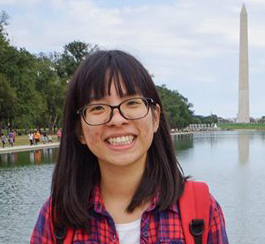
Yuqi Tan

I am a computational biologist and an instructor at Stanford University, specializing in spatial multi-omics. I integrate machine learning with a deep understanding of molecular and cellular biology to build scalable, open-source computational tools and apply them to some of the field's hardest open questions: how to define and engineer cell identity for regenerative medicine, how tumor architecture predicts and drives immunotherapy response, and how spatial organization in the brain shapes psychiatric disease and appetite regulation. I develop ML/AI-powered methods for 2D and 3D spatial-omics and apply them to explore the spatial organization of cell types in healthy aging and disease. Through directly mentoring nine students, designing and teaching three custom courses, and contributing to three global health projects, I am committed to building a diverse, equitable, and inclusive lab that empowers the next generation of researchers.

Google Scholar. CV

Academic training

2026– Instructor, Stanford University
2021–2026 Postdoctoral Fellow, Nolan Lab, Stanford University
2015–2021 PhD, Cahan Lab, Johns Hopkins University
2010–2014 BSc (Hons), Chinese University of Hong Kong

Selected Awards

NIH K99/R00 Pathway to Independence Award · 2025, pending MD Anderson – the Next Generation Award · 2025 Rising Star in Engineering Health Award · 2025 France-Stanford Visiting Junior Scholar Fellowship · 2026
Show more awards
Stanford Cancer Institute Women's Cancer Center Innovation Award · 2023 Life Science Alliance Exchange Grant · 2023 Stanford Bio-X Travel Award · 2022, 2024 Stanford School of Medicine Dean's Fellowship · 2022 Finalist, Rhodes Scholarship – Hong Kong · 2013

Yuqi Tan

Research

My (future) lab is built around a central mission: to make 3D spatial biology accessible, interpretable, and transformative for understanding human health. We develop AI-driven frameworks that not only process massive 3D datasets but also make them intuitive and explainable for biologists and clinicians. Our work focuses on two complementary fronts: building user-friendly computational platforms that lower barriers to adoption, and applying these tools to uncover how tissue architecture changes during key biological processes such as aging, cancer initiation, and immune regulation. By integrating multiple data modalities — from 3D H&E to multiplexed spatial proteomics — we aim to reveal both the structural maps of tissue organization and the molecular rules that drive them. In this way, I will train the next generation of scientists to think in 3D, bridging computation and biology to open entirely new avenues for discovery and therapy.

Values

Be KindBe BrilliantBe ProBe Fun
Research vision: bridging spatial-omics and machine learning across 3D tissue biology, aging, and cancer
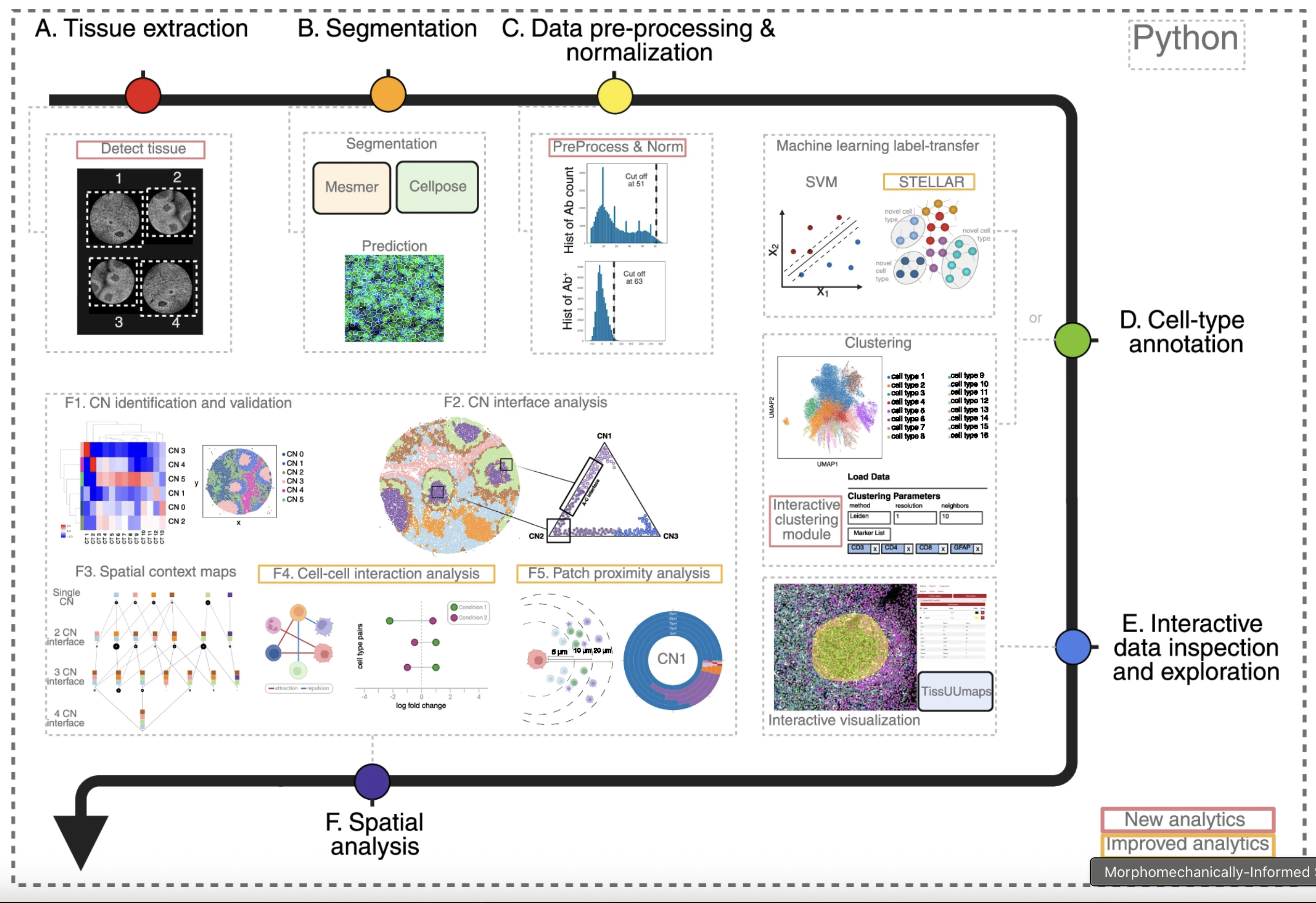
Fig 1. My research vision is to bridge spatial omics and machine learning by developing accessible, interpretable, and generalizable computational tools.

Selected Publications

Grouped by research focus. Bold = Tan; * = co-first authorship; ‡ = corresponding author. Full list in the CV or on Google Scholar.

1. Developing ML/AI tools for 2D & 3D spatial-omics

Multiplexed imaging and spatial transcriptomics generate enormous, complex datasets. I build open-source, deep-learning-powered software that makes these data interpretable, reproducible, and accessible to the wider community.

SPACEc workflow schematic

SPACEc: A Streamlined, Interactive Python Workflow for Multiplexed Image Processing and Analysis. Nat Commun. 2025 Nov;16(1):10652.

Tan*, Kempchen*, Becker*, Haist, Feyaerts, Xiao, Su, Rech, Hickey, and Nolan.

An interactive, open-source Python toolkit that takes multiplexed imaging data from raw images to publication-ready analysis in one streamlined workflow.

STELLAR spatial annotation schematic

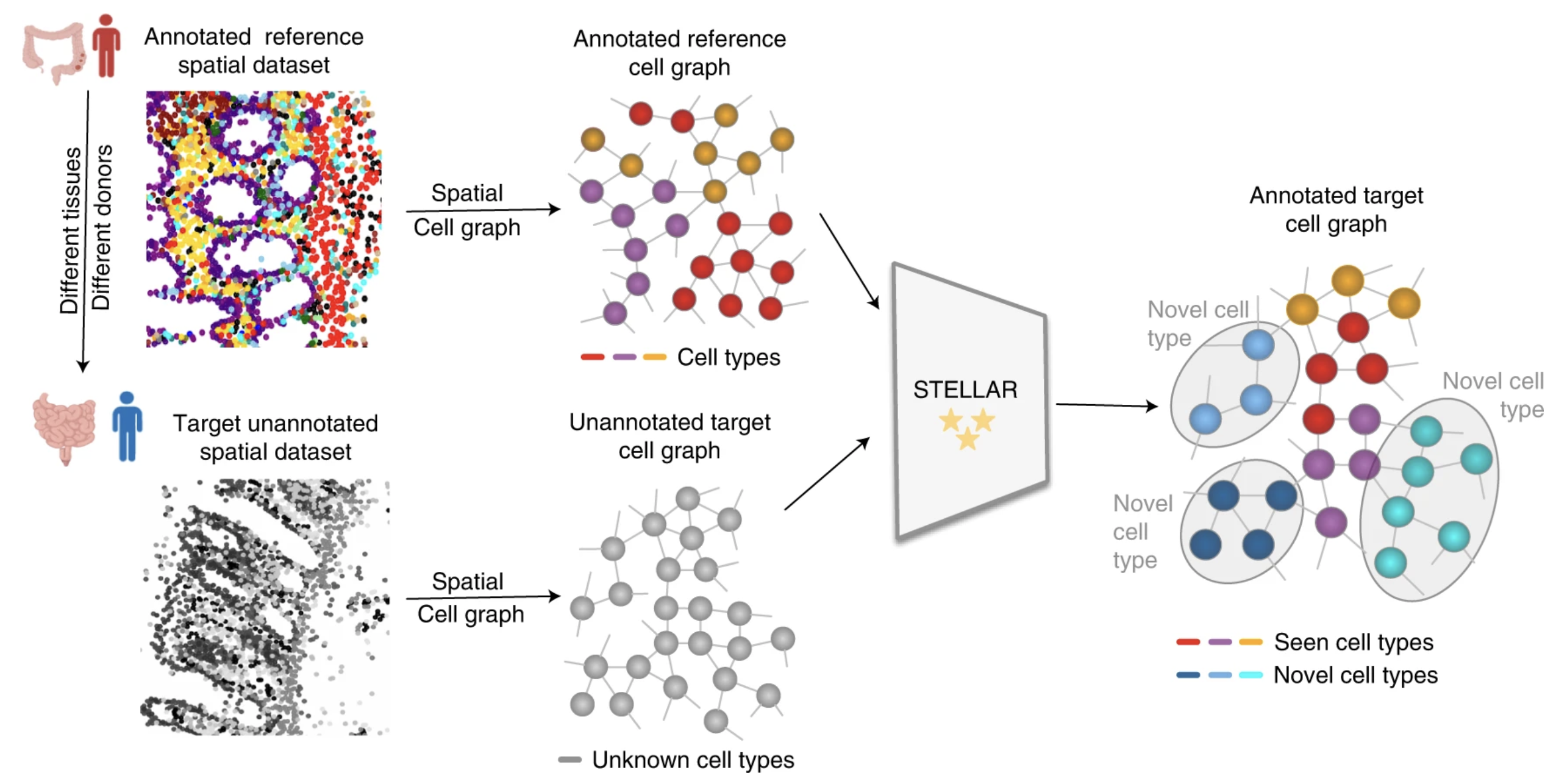
Annotation of Spatially Resolved Single-cell Data with STELLAR. Nat Methods. 2022 Nov;19(11):1411-1418.

Brbic*, Cao*, Hickey*, Tan, Snyder, Nolan‡, and Leskovec‡.

A graph neural network that automatically annotates cell types in spatial data, transferring labels from annotated to unannotated tissues without manual gating.

Fault-tolerant 2D-to-3D spatial proteomics reconstruction schematic

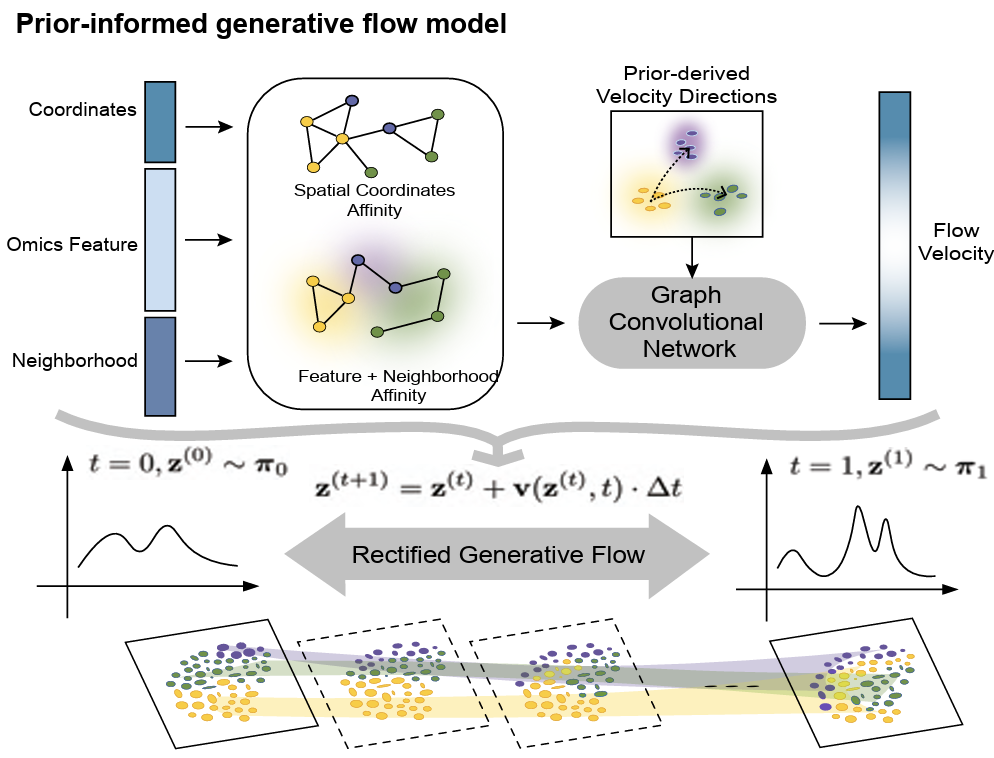
Fault-tolerant 3D reconstruction from 2D spatial proteomics sections. BioRxiv. Jun 2026.

Zhang*, Tan*, Snyder, Nolan‡, and Ma‡.

A computational framework that stitches noisy, imperfect 2D tissue sections back into accurate 3D spatial-proteomics volumes.

Virtual spatial transcriptomics

Target Selection Beats Model Size in Virtual Spatial Transcriptomics. Under review, JITC. Jun 2026.

Azher, Nolan‡, and Tan‡.

Shows that which genes you image matters more than how big your model is — a practical guide for designing virtual spatial transcriptomics experiments.

2. Defining cell identity for stem cell engineering

Understanding what makes a cell "the right cell" is central to regenerative medicine. I develop machine learning models that quantify and guide cell-type identity, from classifying single-cell profiles to benchmarking engineered cells against their in vivo counterparts.

SingleCellNet classifier schematic

SingleCellNet: a computational tool to classify single cell RNA-Seq data across platforms and across species. Cell Syst. 2019 Aug 28;9(2):207-213.e2.

Tan, and Cahan.

A classifier that lets researchers compare single-cell data across platforms, species, and labs using a common, interpretable cell-type vocabulary.

Embryogenesis single-cell comparison schematic

Quantitative comparison of in vitro and in vivo embryogenesis at a single cell resolution. BioRxiv. Feb 2024.

Tan, Spangler, Han, Farid, Peng, and Cahan.

Benchmarks lab-grown embryo models against real embryos at single-cell resolution, revealing where in vitro systems succeed and fall short.

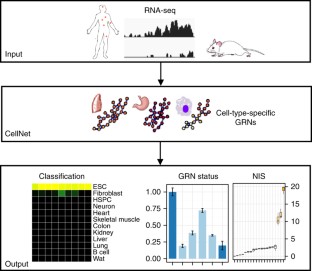
CellNet assessment pipeline schematic

Assessing engineered cells using CellNet and RNA-Seq. Nat Protoc. 2017;12:1089-1102.

Radley, Schwab, Tan, Kim, Lo, and Cahan.

A step-by-step protocol for using CellNet to objectively score how well engineered cells resemble their target cell type.

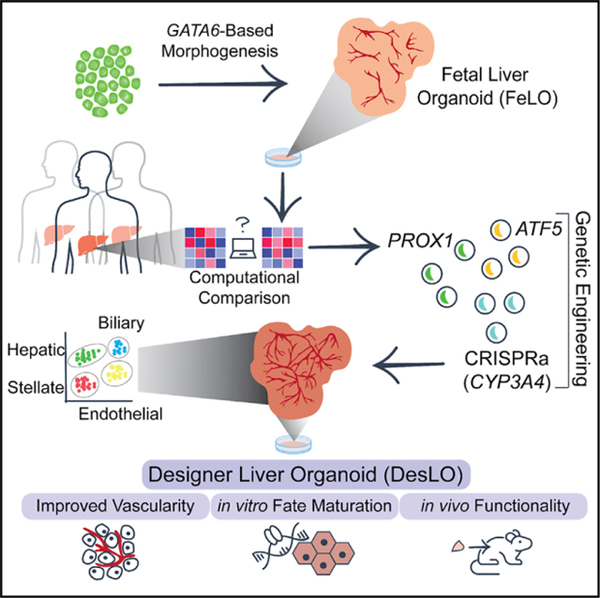
Liver organoid gene regulatory network engineering schematic

Gene Regulatory Network Analysis and Engineering Directs Development and Vascularization of Multilineage Human Liver Organoids. Cell Syst. 2020 Nov 30.

Velazquez, LeGraw, Moghadam, Tan, Kilbourne, Hislop, Liu, Cats, de Sousa Lopes, Plaisier, Cahan, Kiani, and Ebrahimkhani.

Uses gene regulatory network analysis to guide the engineering of more mature, vascularized human liver organoids.

3. Identifying spatial predictors of cancer immunotherapy response

Why do some tumors respond to immunotherapy while others resist it? I use spatial profiling to uncover the tissue architecture and immune-cell interactions that predict and drive treatment response — and to train the next generation of researchers to ask these questions.

Spatial myeloid-CD8 T cell aggregates schematic

Spatially organized inflammatory myeloid-CD8+ T cell aggregates linked to Merkel-cell Polyomavirus driven Reorganization of the Tumor Microenvironment. BioRxiv. Feb 2026.

Haist*, Matusiak*, Tan*, Zimmer, Stege, Kempchen, Mischke, Chu, Weidenthaler-Barth, Barlow, Rogall, Gonzalez, Vaertsch, Goltsev, Grabbe, Hickey, and Nolan.

Identifies spatially organized immune-cell neighborhoods in Merkel-cell carcinoma that reorganize the tumor microenvironment.

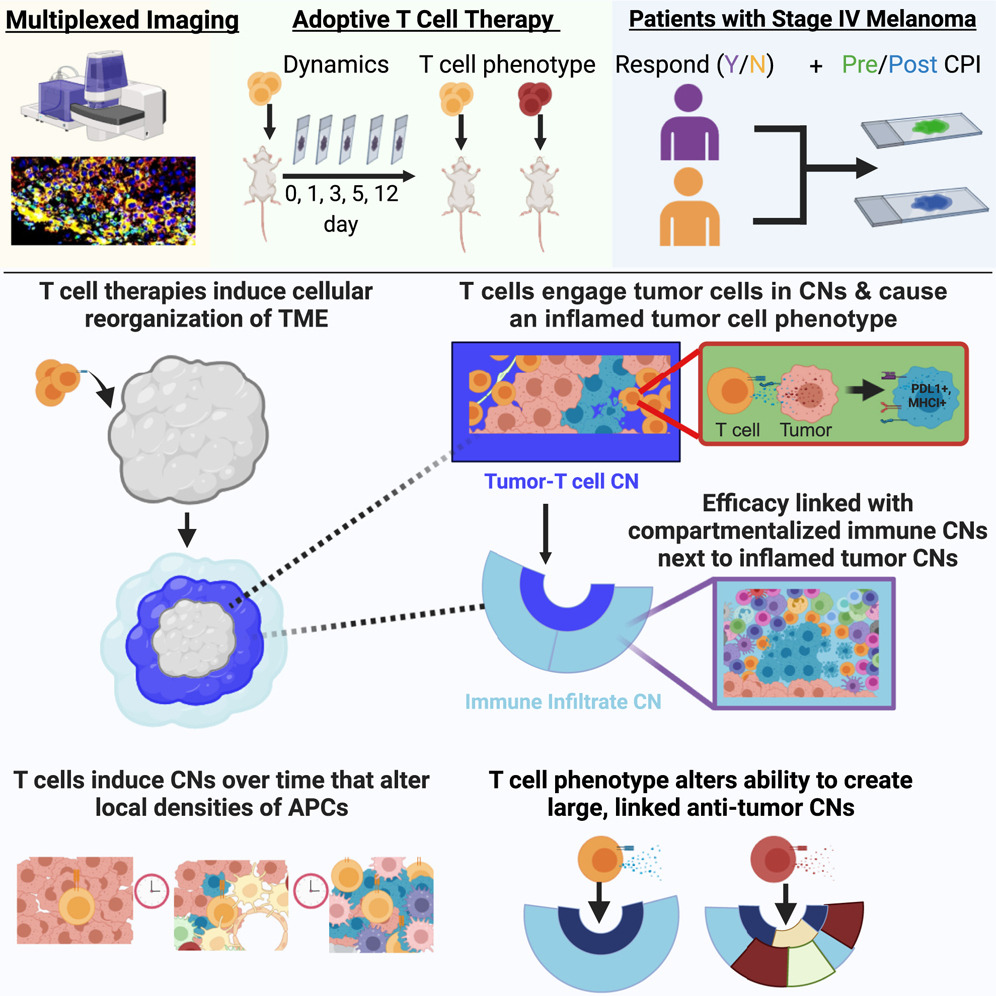
T cell

T Cell Mediated Curation and Restructuring of Tumor Tissue Coordinates an Effective Immune Response. Cell Rep. 2023 Dec 26;42(12):113494.

Hickey, Haist, Horowitz, Caraccio, Tan, Rech, Baertsch, Rovira Clave, Zhu, Vasquez, Barlow, Agmon, Goltsev, Sunwoo, Covert, and Nolan.

Shows how T cells physically remodel tumor tissue architecture during an effective anti-tumor immune response.

ADOREG melanoma registry study design

Treatment management for BRAF-mutant melanoma patients with tumor recurrence upon adjuvant therapy: A multicenter study from the prospective skin cancer registry ADOREG. J Immunother Cancer. 2023 Sep;11(9):e007630.

Haist*, Stege*, Rogall, Tan, Wasielewski, Klespe, Meier, Mohr, Kähler, Wichenthal, Schadendorf, Ugurel, Lodde, Zimmer, et al., Grabbe, and Loquai.

A multicenter registry study identifying treatment patterns and outcomes for melanoma patients who recur after adjuvant therapy.

4. Delineating the molecular mechanisms behind psychiatric disease and neurometabolism

Beyond cancer, I study how spatial and molecular changes in the brain relate to psychiatric disease, appetite regulation, and neurodevelopment — from hypothalamic circuits controlling food intake to the molecular signatures of depression.

Hippocampus × MDD

Spatially resolved multi-omic profiling of human hippocampus reveals region-specific alterations in major depressive disorder. Submitted, May 2025.

Xiao*, Su*, Tan*, Deng, Li, Ma, Kim, Bai, Liu, Rosoklija, Sissoko, Wu, Santiago, Dwork, Hen, Mann, Fan‡, Leong‡, and Boldrini‡.

Maps region-specific molecular changes in the human hippocampus associated with major depressive disorder.

Hypothalamic BNC2 neurons appetite schematic

Leptin Activated Hypothalamic BNC2 Neurons Acutely Suppress Food Intake. Nature. 2024 Dec;636(8041):198-205.

Tan, Yin, Tan, Ivanov, Plucinska, Ilanges, Herb, Wang, Kosse, Cohen, Lin, and Friedman.

Identifies a hypothalamic neuron population that leptin activates to acutely suppress food intake.

Conferences

Selected invited talks (2025–2026)

Show full speaking history (2017–2025)

Invited

  • Helmholtz Munich AI for Health Center (2025, Munich, Germany)
  • University of Basel (2025, Basel, Switzerland)
  • University of Würzburg, Institute for System Immunology (2025, Würzburg, Germany)
  • The German Cancer Research Center – DKFZ (2025, Heidelberg, Germany)
  • University of Bonn, Cluster of Excellence ImmunoSensation Symposium (2025, Bonn, Germany)
  • MD Anderson Data Science Hackathon (2025, Houston, TX): TLS & Where to find them
  • Visualization and User Experience Seminars on Spatial Biology, Harvard Medical School (2025, Boston, MA): On the way to a human 3D intestine atlas
  • MultiOmics 2024 (Brisbane, Australia): Make Computational Analysis for Multiplexed Image Easy
  • EPFL (2024, Switzerland): Versatile and Interactive Python Workflow for 2D and 3D Multiplexed Image Analysis
  • The European Molecular Biology Laboratory (2024, Heidelberg, Germany): Best Practice for Multiplexed Image Analysis
  • Yale University, Biomedical Engineering Department (2023, New Haven, CT): A Spatial Biologist's Guide to Decode Multiplexed Image Analysis
  • Columbia University, Biomedical Engineering Department (2023, New York City, NY): A Spatial Biologist's Guide to Decode Multiplexed Image Analysis
  • East China Normal University (2021, Shanghai, China): Machine-learning tools on multi-omics analysis
  • Johns Hopkins University BCMB Program Annual Retreat (2019, Cambridge, MD): SingleCellNet
  • Cell Molecular Biology Symposium, CUHK (2018, Hong Kong): A quantitative solution of cell type identity for stem cell engineering

Selected presentations

  • The European Society for Spatial Biology Annual Meeting (2025, Heidelberg, Germany): AI and spatial-omics analysis
  • Single Cell Genomics Gordon Research Seminar (2024, Les Diablerets, Switzerland)
  • Hong Kong Laureate Forum (2023, Hong Kong): Identify structural and cellular drivers of DCIS progression
  • Artificial Intelligence in Medicine (2022, Stralsund, Germany): Annotation of Spatially Resolved Single-cell Data with STELLAR
  • International Society for Stem Cell Research Annual Meeting (2019, Los Angeles, CA)

Posters

  • Single Cell Genomics Gordon Conference (2022, Switzerland)
  • International Society for Stem Cell Research Annual Meeting (2020, Virtual; 2017, Boston)

Teaching & Mentoring

Mentorship

I have directly mentored nine students across high school, undergraduate, master's, and PhD levels — see where they've gone next.

High school 1 mentee, from a Bay Area high school
Undergraduate 6 mentees, from institutions including JHU, Caltech, Occidental, UChicago, University of Kansas, and Tsinghua University — now in PhD programs at Stanford and Rice, an MD-PhD at Weill Cornell, a Software Engineer role at the University of Virginia, and continuing undergraduate/graduate study
Master's 1 mentee, from the University of Heidelberg → now a PhD student at the University of Bonn
PhD 1 mentee, from JHU → now a Scientist at Vertex

Classroom teaching

Instructor Single-cell Spatial-omics: with Applications to Stem Cell Engineering and Cancer Immunotherapy @Stanford (2022)
Neuroscience: A single cell story @JHU (2020)
Biomedical Engineering: Topics in Stem Cell Biology @JHU (2019)
Guest lecturer Image Processing and Advanced Machine Learning for Cancer Bioinformatics (BIOINF 590) @University of Michigan (2024)
Single Cell Biology (BENG469) @Yale University (2023)
Computational Stem Cell Biology @JHU (2020, 2021)
Introduction to Biological Molecules @JHU (2018)
Teaching assistant Computational Stem Cell Biology @JHU (2020–2022)
Practical Genomics Workshop @JHU (2018–2019)
Computational Biology and Bioinformatics @JHU (2017–2019)
Pedagogy training Stanford Preparing for Faculty Careers Course (2024)
JHU Preparing Future Faculty Teaching Academy (2018)
Institute for Educational Excellence Summer Teaching Camp (2017)

Join Us

I am building a team that welcomes curious, kind, and rigorous scientists at every career stage — and I'd love to hear from you.

Visiting undergraduate & master & PhD

I have a strong track record of mentoring trainees into PhD programs and industry roles — see Teaching & Mentoring for examples.

Where to Find Me

I'll be at the following conferences over the next few months — come say hi.

Sept 28–Oct 1, 2026 ESSB 2026 — Sitges (Barcelona), Spain
Dec 6–8, 2026 Multi-Omics 2026, Brisbane, Australia
Jan 30–Feb 3, 2027 SLAS 2027, San Diego, USA

Email me with a short note about your background and interests, along with your CV.


Join the Tan Lab

Interests

Other areas where I lavish my curiosity and abundant energy

Blog

Occasional notes on technology, academia, and entrepreneurship.

Perspective

Training Tomorrow's Leaders in Cancer Immunology. Cancer Immunol Res. 2026 Feb;14(2):186-193.

Tan*, Kim*, Mujal, Chen, Weis, Bergaggio, Micevic, Xie, Park, Hor, Papanicolaou, Shobaki, Pomizi, Delconte, Vendramin, Hedge, Han, Su, and Hacohen.

A perspective on training the next generation of cancer immunologists at the interface of computation and immunology.